Smallest response
Low rotating mass and compact clearance for short, precise lines.
Flywoo FPV setup guide
Propeller diameter changes more than the physical size of an FPV drone. It changes how quickly the aircraft rotates, how efficiently it cruises, how much wind it can manage, and how much room it needs to complete a line. This guide maps those differences to real Flywoo aircraft.
Quick answer
For tight gaps and the lightest possible aircraft, choose the 1.6- to 1.8-inch class. Choose 2-inch props for sharper micro freestyle, 2.5-inch props for smoother outdoor control and longer flight time, and 4-inch bi-blades when efficient scenic cruising matters more than rapid direction changes.
Low rotating mass and compact clearance for short, precise lines.
A little more disk area while keeping a true ultralight toothpick feel.
A compact balance of acceleration, grip and close-range freestyle.
More efficient lift and calmer outdoor movement with extra inertia.
Large disk area and bi-blade efficiency for long scenic routes.
What changes
NASA explains propeller thrust as the result of accelerating air through the propeller disk. On an FPV quad, increasing diameter expands that disk area, while pitch and blade count change how aggressively each rotation loads the air and the motor.
A small prop can change RPM quickly, which helps a light quad feel immediate during rolls, direction changes and throttle corrections. A larger prop moves more air but takes more torque to accelerate and slow down.
Higher pitch can increase forward drive, but only when the motor has enough torque. An over-pitched prop can increase current draw, heat and voltage sag while making the aircraft feel less responsive.
Bi-blades generally reduce drag and suit efficient cruising. Tri-blades add blade area and grip, which supports freestyle control and compact thrust, but usually costs some efficiency.
A Flylens whoop and a Firefly open-frame quad can use a similar diameter but feel very different. Ducts add protection and drag; open props keep the aircraft lighter and freer in fast outdoor airflow.
Size comparison
| Prop class | Typical feel | Efficiency | Wind handling | Best environment | Flywoo example |
|---|---|---|---|---|---|
| 40 mm / 1.6 in | Fast RPM changes, very light momentum | Good for the tiny weight class | Most wind-sensitive | Large indoor spaces and calm outdoor gaps | Firefly 16 1S Nano Baby |
| 45 mm / 1.8 in | Still quick, with slightly more carry | Efficient ultralight cruising | Calm-weather outdoor use | Backyards, short park lines and travel practice | Firefly 18 1S Nano Baby |
| 40 mm ducted tri-blade | Quick protected response with added duct drag | Moderate | Best in sheltered spaces | Indoor filming and compact proximity routes | Flylens 75: 1611-3 |
| 2 in ducted bi-blade | More carry and authority with full prop protection | Moderate | Better suited to mixed indoor and outdoor routes | Protected cinematic lines and outdoor proximity | Flylens 85: 2015-2 |
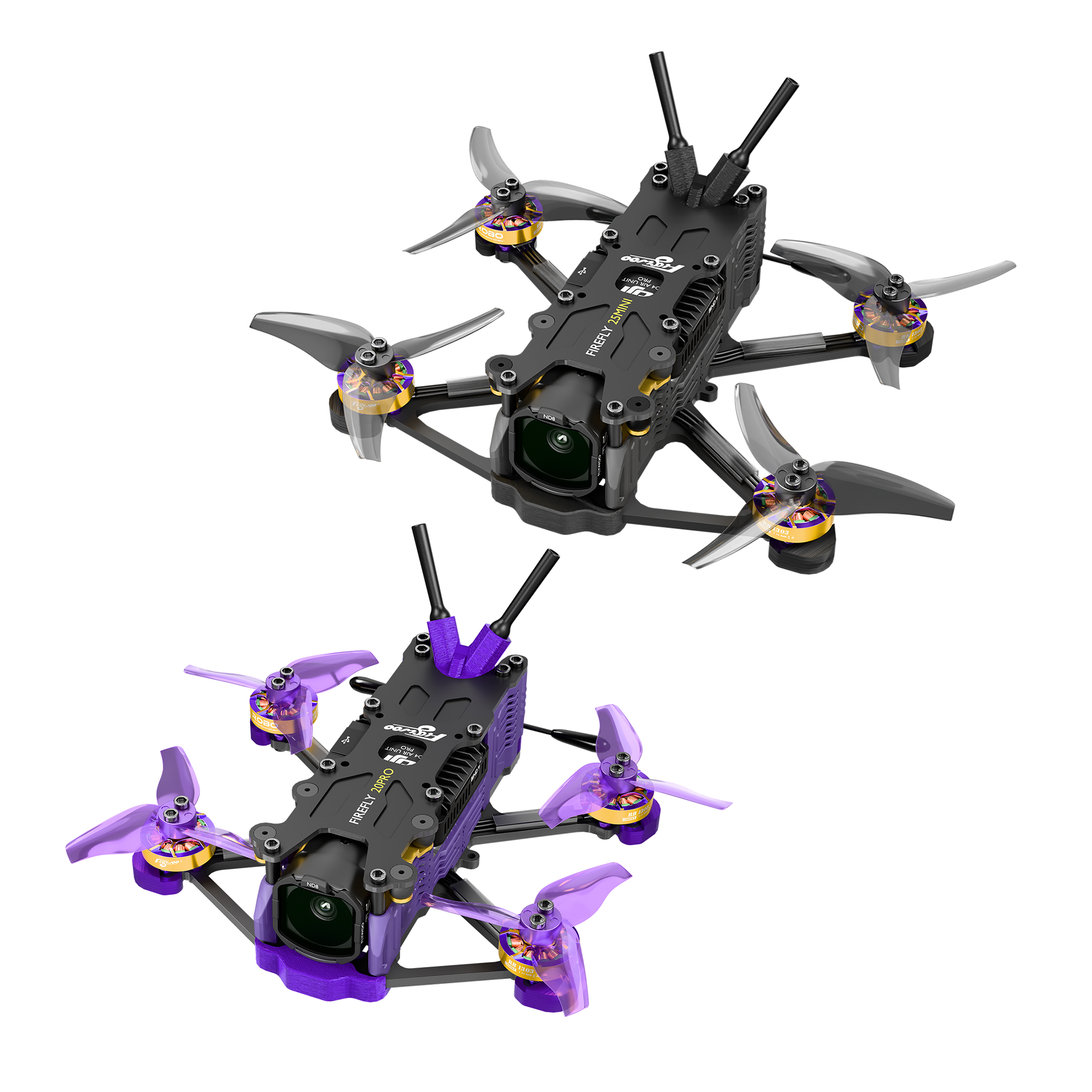
| 2 in open tri-blade | Sharp acceleration and tight micro freestyle | Moderate | Good for a compact 4S micro | Local parks, tight outdoor lines and freestyle | Firefly 20PRO 4S |
| 2.5 in open tri-blade | Smoother, calmer and less abrupt | High for a micro cinematic build | Better than the 2-inch class | Outdoor cinematic cruising and flowing freestyle | Firefly 25MINI 3S |
| 4 in bi-blade | Stable cruise with slower direction changes | Highest in this comparison | Useful outdoors, still affected by low aircraft mass | Travel, scenic routes and long-range efficiency | Explorer LR 4 |
Flywoo product fit
The best choice is the aircraft designed around the propeller class, not a larger prop forced onto a smaller frame. Motor KV, voltage, frame clearance, tuning and battery weight all need to work as one system.
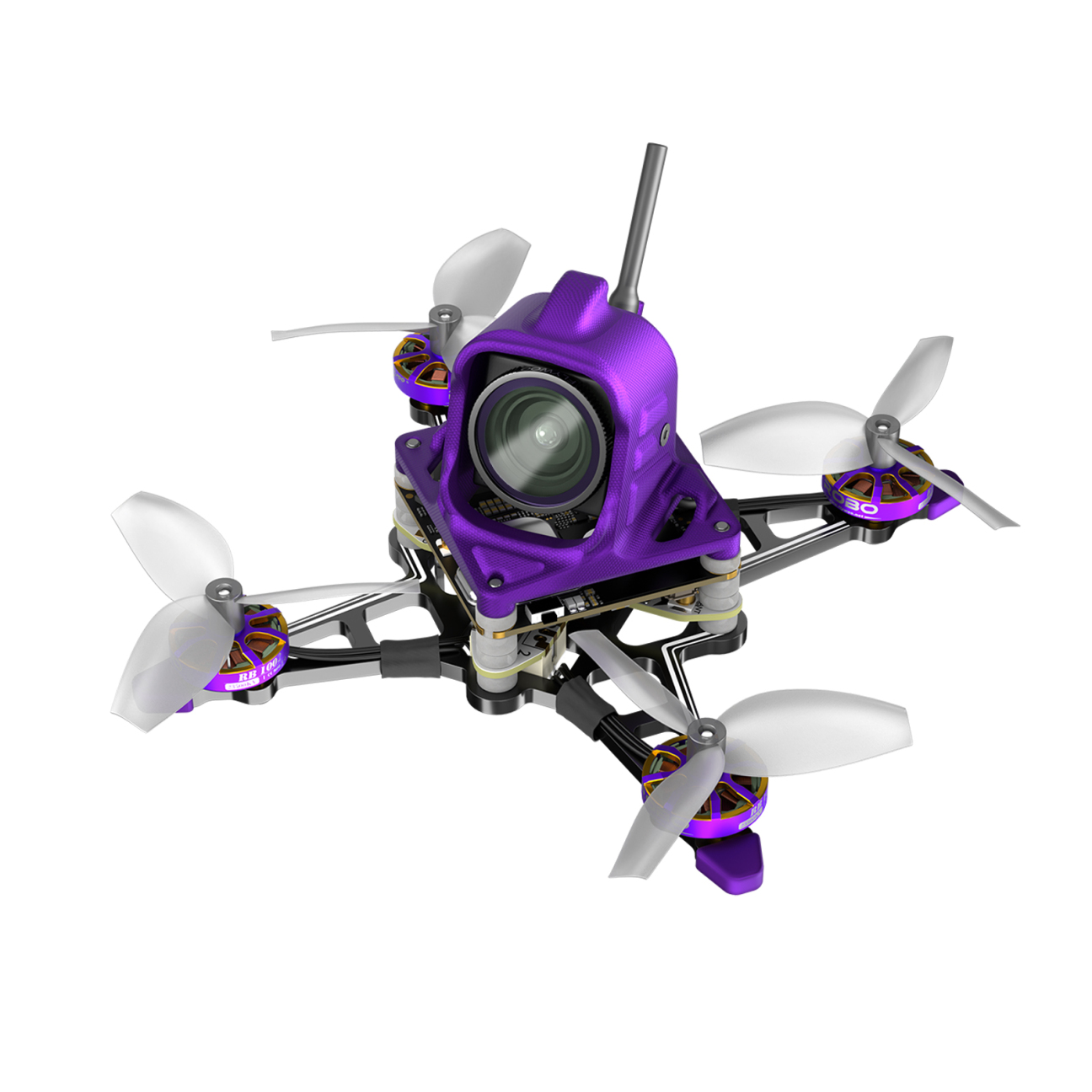
Firefly 16: HQ 40MMX3 tri-blades and 23500KV motors favor the smallest, quickest 1S setup. Firefly 18: HQ 45MMX2 bi-blades and 19800KV motors add disk area and a little more carry. Best for: ultralight travel and compact gaps. Not best for: strong wind or protected-prop routes.
Firefly 16 Firefly 18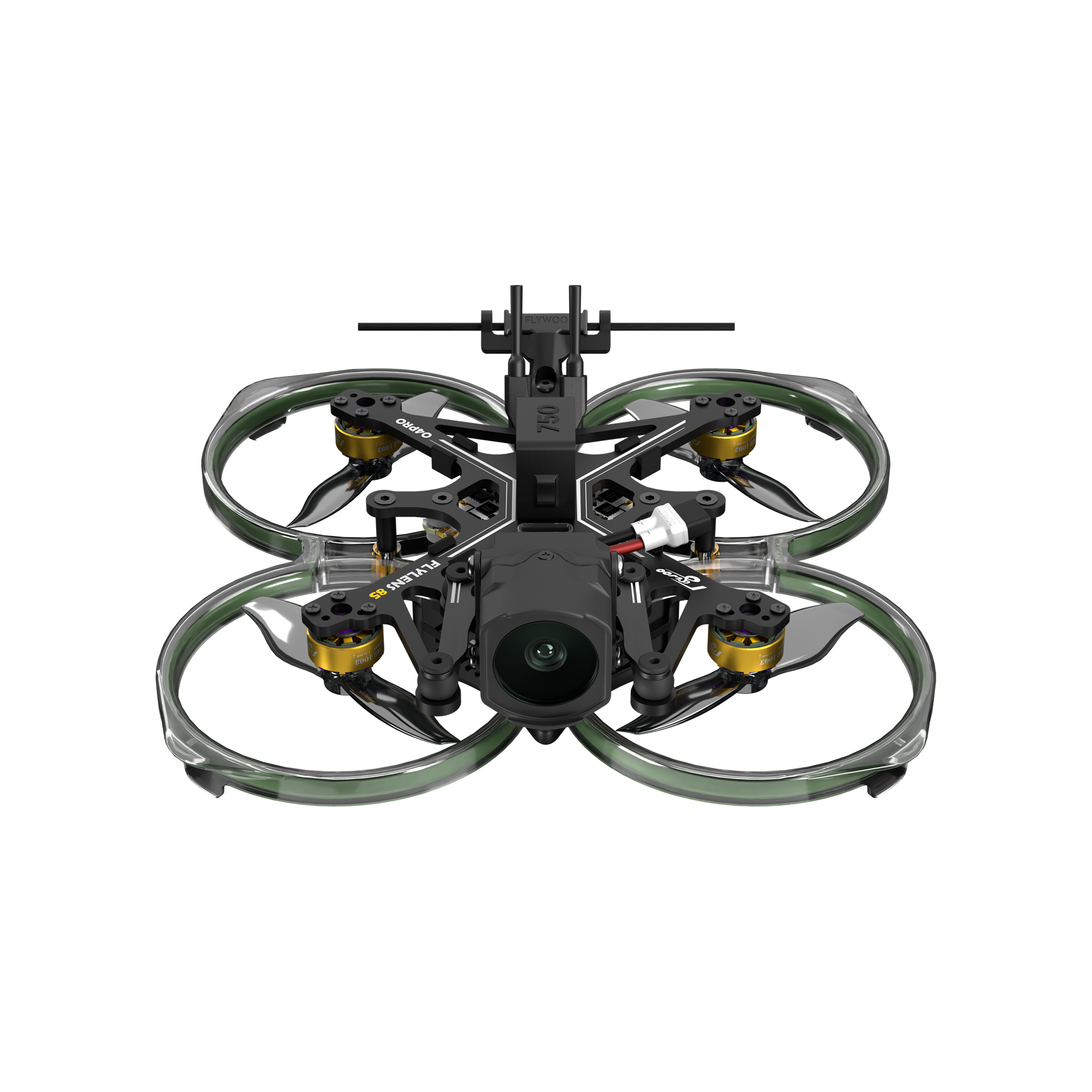
Flylens 75: 1611-3 40 mm tri-blades keep the protected platform compact. Flylens 85: 2015-2 bi-blades move it into the full 2-inch whoop class. Best for: protected close-range HD routes. Not best for: aggressive open-prop freestyle.
Flylens 75 Flylens 85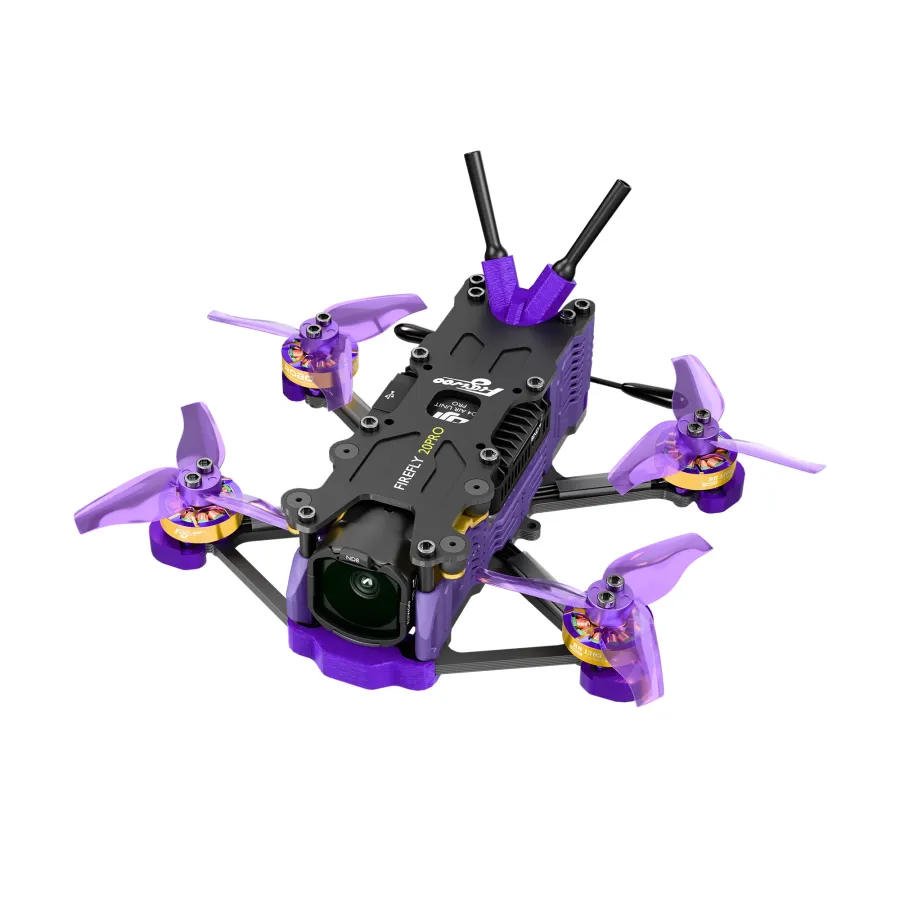
Best for: fast micro freestyle and tight outdoor turns. Not best for: relaxed endurance cruising. Pros: sharp acceleration and agility. Cons: shorter flight time than the 2.5-inch class.
Explore Firefly 20PRO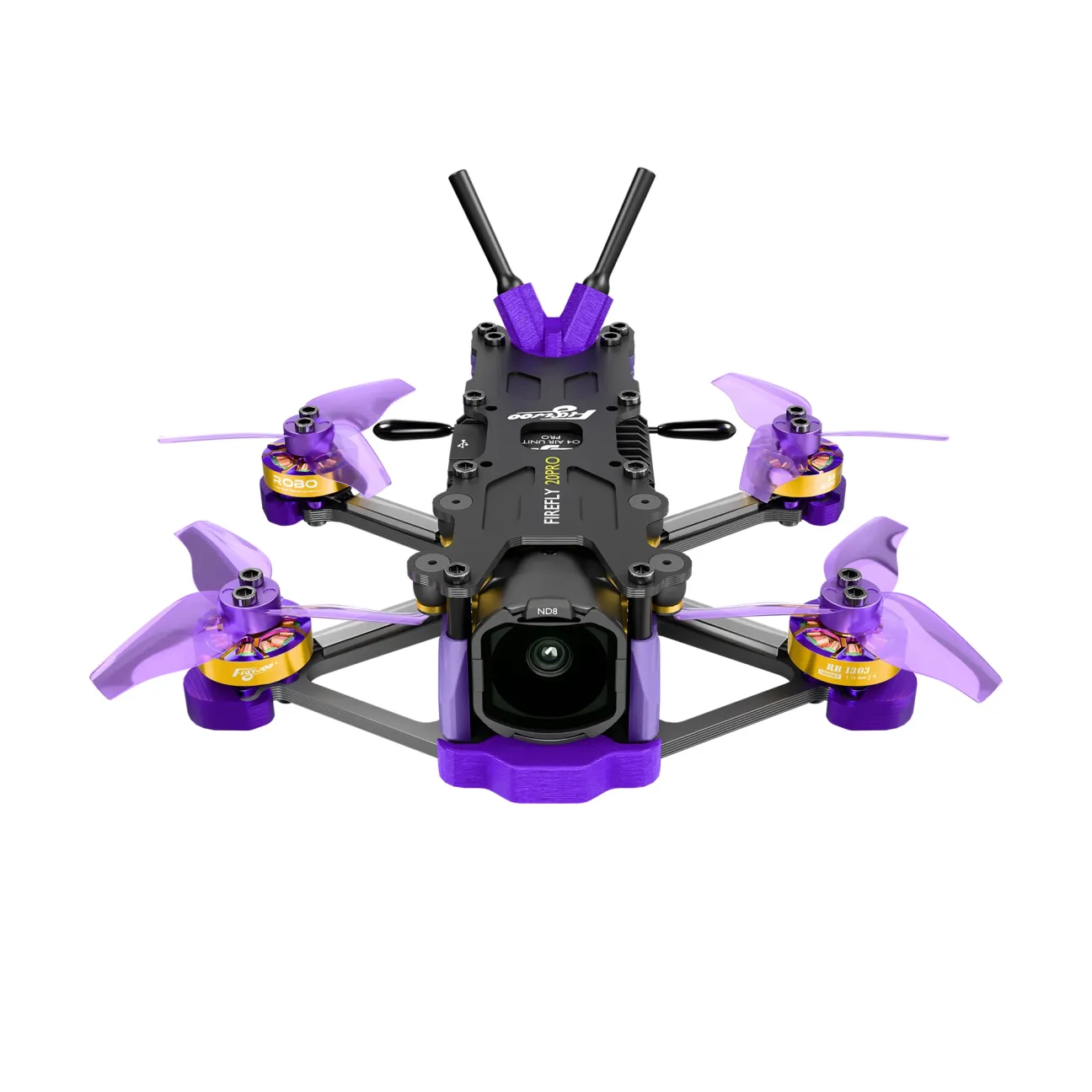
Best for: smooth outdoor lines and efficient micro cinematic flying. Not best for: the quickest direction changes. Pros: efficiency and calmer carry. Cons: more rotational inertia.
Explore Firefly 25MINI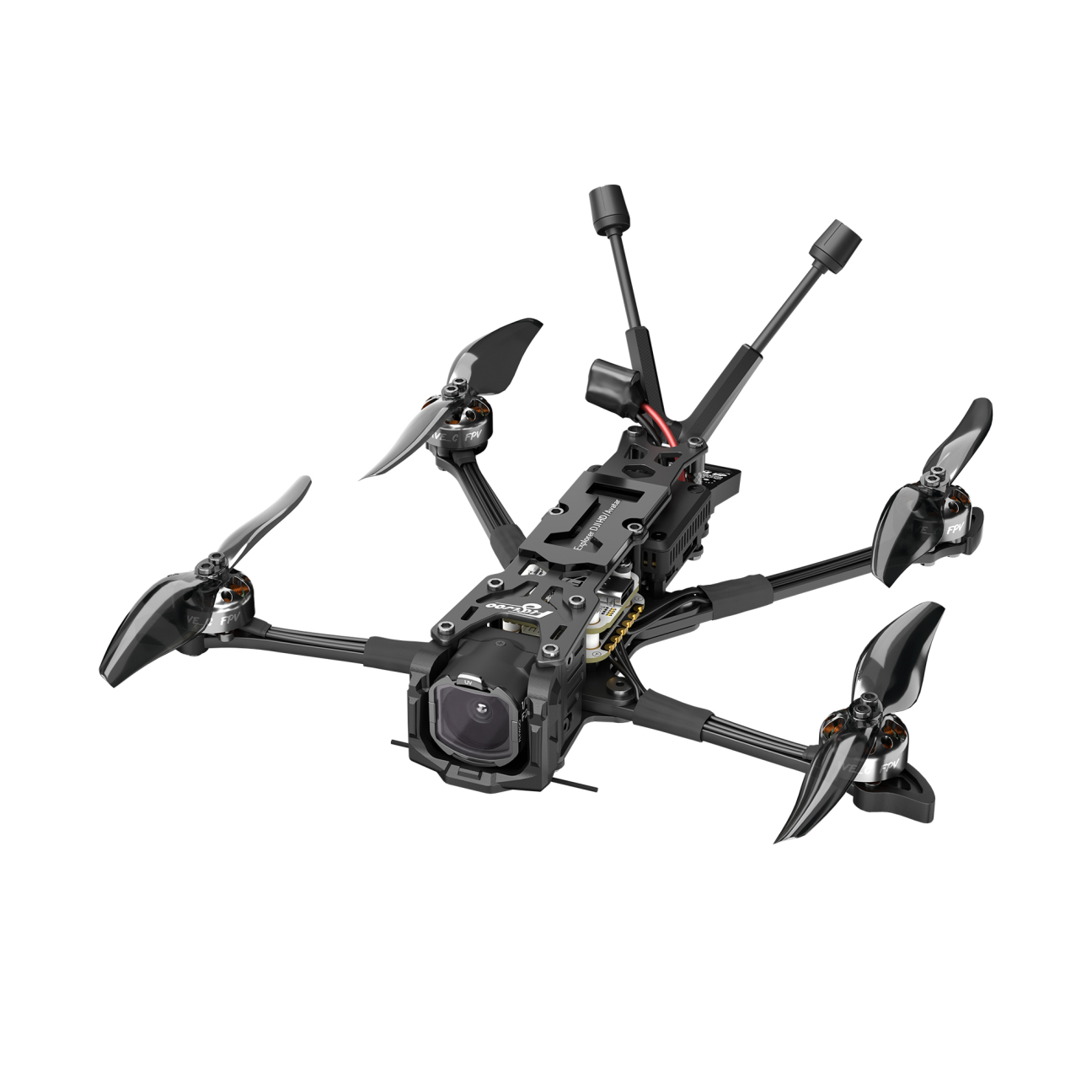
Best for: scenic cruising and long-range route planning. Not best for: repeated snap moves or aggressive freestyle. Pros: efficient lift and endurance. Cons: slower directional response.
Explore Explorer LR 4Independent flight tests
Oscar Liang's 2026 testing found the Firefly 20PRO quick and highly agile, while the larger-prop Firefly 25MINI delivered smoother behavior and substantially longer cruising time. His Explorer LR 4 testing shows the calmer, efficiency-first character of a 4-inch long-range platform.
The 2-inch tri-blade setup favors fast acceleration, quick turns and compact freestyle lines.
The larger 2.5-inch prop carries more momentum and supports efficient, flowing outdoor movement.
The 4-inch bi-blade platform is tuned for stable cruising and endurance rather than a sharp freestyle feel.
Selection method
Indoor protection, tight outdoor gaps, flowing park lines and long scenic routes need different disk sizes.
Choose fast RPM response for agility or larger disk area for smoother lift and efficient cruising.
Motor stator, KV, battery voltage and ESC capacity must support the propeller load.
Confirm pitch, blade count, shaft size, mounting method, rotation direction and frame clearance.
Inspect for contact, vibration, motor heat, loose hardware and abnormal current draw before a full flight.
Common mistakes
Physical clearance does not prove that the motor, ESC and tune can handle the extra inertia and load.
When the motor cannot sustain the load, higher pitch can create heat and voltage sag instead of useful speed.
All four propellers should match in size, pitch, blade count and model unless a specialized setup has been deliberately tested.
A small bend can add vibration to the camera and flight controller. Replace damaged props before judging tune or footage quality.
FAQ
No. Larger props can improve efficiency and low-RPM thrust with the right motor, but they add rotational inertia and generally slow rapid direction changes. Choose by flying style and the complete power system.
Use 1.6- to 1.8-inch props for the smallest ultralight routes, 2-inch props for compact agility, 2.5-inch props for smoother outdoor cruising, and 4-inch bi-blades for efficient long-range flying.
Usually no. Extra blades add grip and thrust within a limited diameter, but they also increase drag and motor load. Bi-blades commonly favor efficiency; tri-blades commonly favor control authority.
Only when the frame, motor, ESC, tuning and clearance are designed for them. Use the propeller size specified for the aircraft unless the full setup has been validated.
A same-size replacement may fly normally, but large changes in diameter, pitch, weight or blade count can change motor noise and response. Test cautiously and monitor motor temperature and vibration.
Final recommendation
Firefly 16 and 18 keep the aircraft ultralight. Flylens 75 and 85 add protection for proximity work. Firefly 20PRO prioritizes micro freestyle response, Firefly 25MINI trades some sharpness for smooth efficiency, and Explorer LR 4 uses four-inch bi-blades for scenic range. Bigger is useful only when it serves the route.
Jul 18,2026 | FLYWOO